Every year, companies look for business gifts to thank partners, reward employees, or mark an important milestone. The options are plentiful. But what do you choose when the standard offering doesn’t express what you want to say?
Sometimes a thoughtfully chosen existing product is enough. Other times the idea calls for a different approach: a distinctive shape, an unexpected combination of materials, or an object that carries meaning specific to a particular company and its recipients.
That’s when you don’t start searching a catalogue — you start developing a product. From the first idea to a prototype and a production run, it’s possible to create a gift that isn’t merely branded with a logo, but designed around its own story.
If you want to present that gift in December, October is the right time for the first conversation. How long the project will take depends primarily on what you already know and what still needs to be developed. That’s why it makes sense to think about it now.
The catalogue offers a choice. Development offers a reason. The recipient notices the difference when they open the gift.
What Is the Difference Between a Catalogue Item and a Custom-Developed Gift?
A catalogue item exists before the order. You choose it, add a logo if needed, and send it. A gift developed to order emerges from a specific idea. Its shape, material and function are determined by the purpose, the recipient and the message it’s meant to carry.
The difference isn’t necessarily in price. It’s in whether the object carries context that an ordinary product cannot express in the same way. The recipient of a custom gift knows it was made for them.
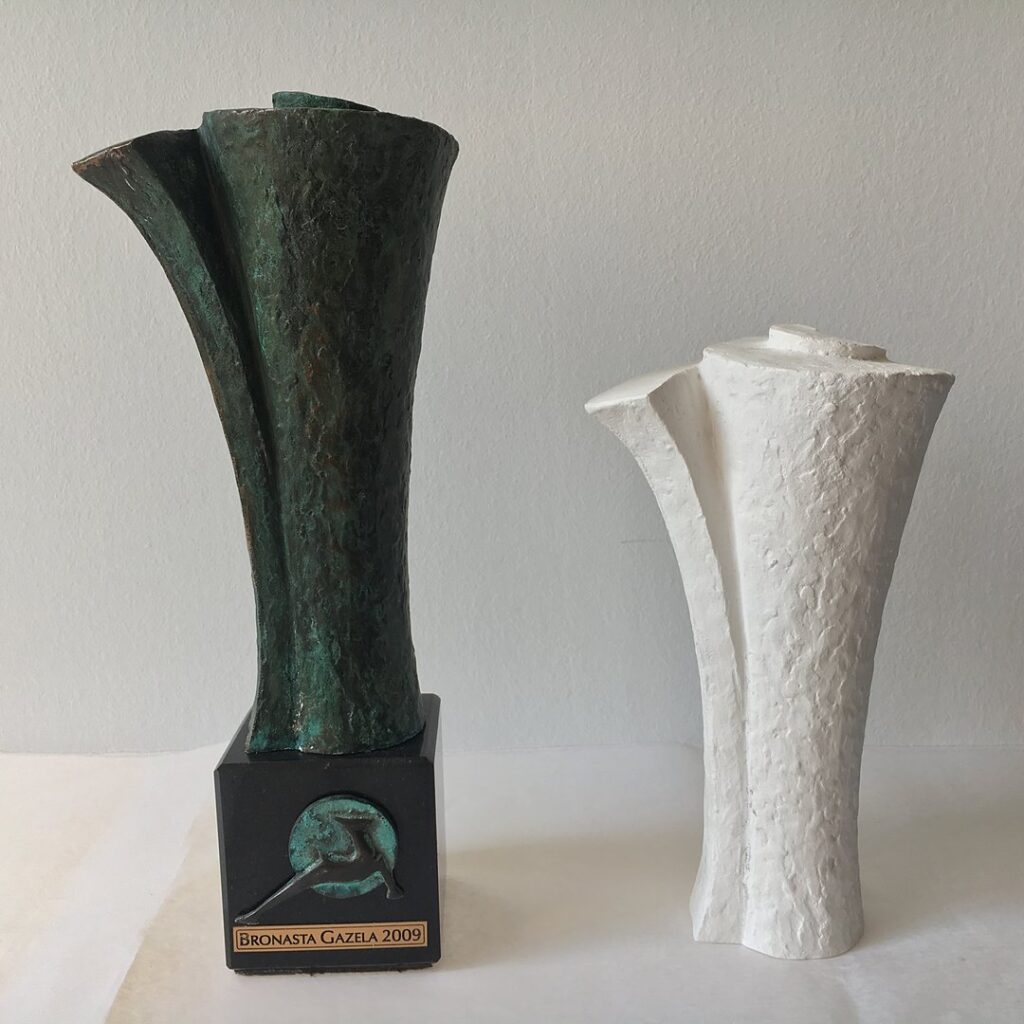
When a company received the Gazela award, the original stayed where it belongs: in the company. But the employees wanted to do something more. They wanted to show the director who had led them through years of growth to that important moment that they valued his work.
They came to us with one idea: a sculpture the director could take home.
They brought the original award. We made a silicone mould from it and cast a replica in ceramic casting compound within three days, in the desired colour and on its own base. Read about how the production unfolded in the Gazela project case study.
Custom development doesn’t mean a more complex process. It means starting with the question of what the client wants to say — and to whom.
Is It Possible to Adapt Shape, Material and Function at the Same Time?
Yes — and it’s precisely the combination of these three elements that determines whether a gift carries an identity or merely a logo.
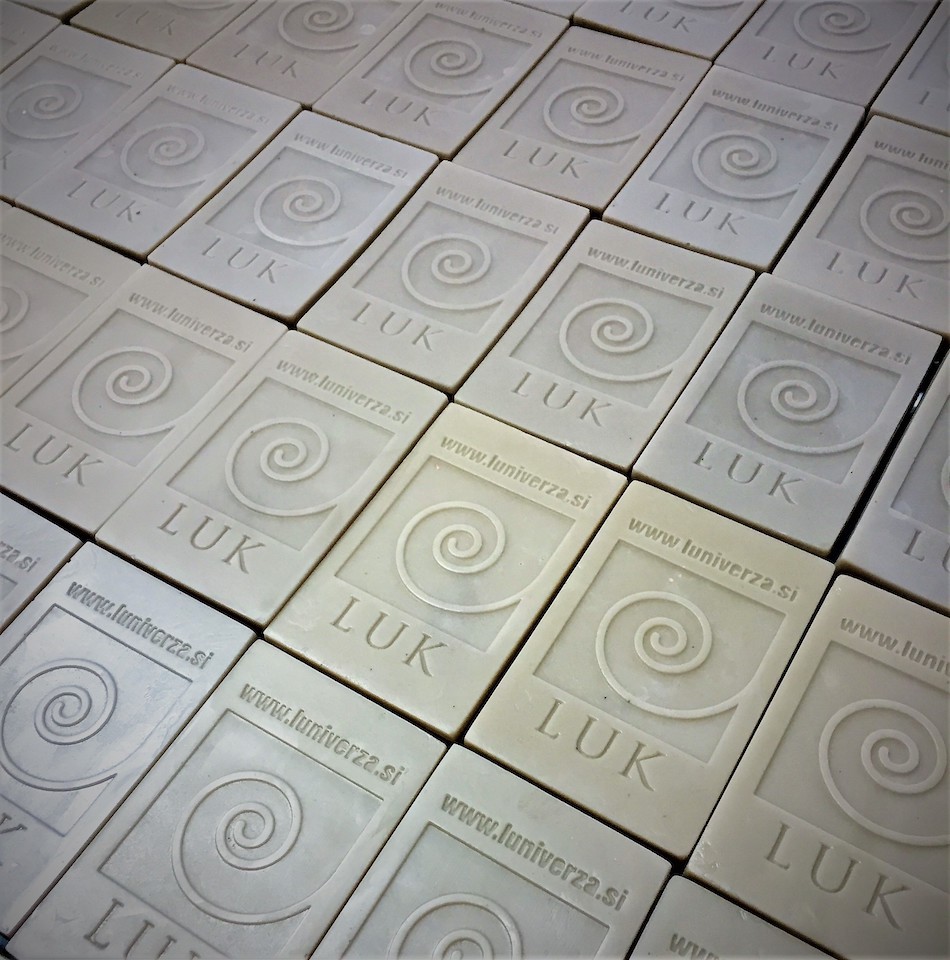
With the LUK soap for Ljudska univerza Kranj, shape and material weren’t chosen separately. The brand identity was built into the object itself. The shape, texture and packaging all derived from what LUK represents. The logo wasn’t added at the end — it was part of the geometry from the start. Studio U3nek, responsible for LUK’s visual identity, set the design framework. Our task was to ensure the concept could actually be made: that the material could achieve what was intended and that consistency across the production run could be guaranteed.
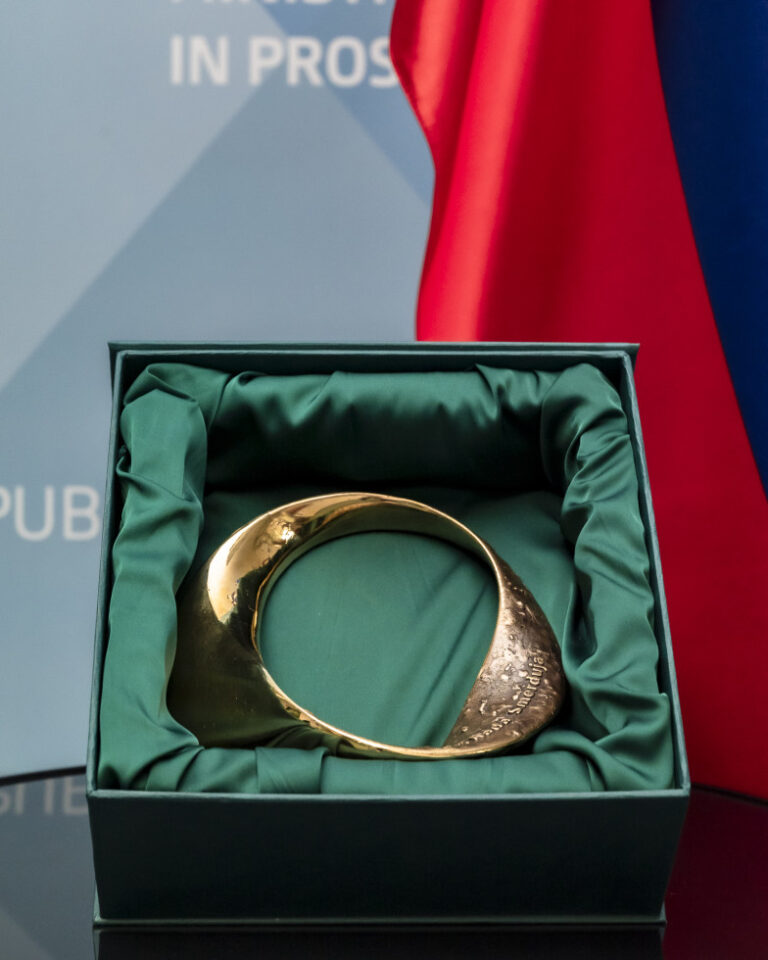
With the sculpture for the Rada Smerduja Award, the challenge was different. Author Urh Wiegele started from the idea that nature is a system of inseparable bonds, with no beginning and no end. The sculpture — an infinite loop with a mirror-polished surface — symbolises the fragility of natural ecosystems. Its physical instability isn’t a flaw; it’s part of the message. Our task was to ensure the author’s concept survived the production process: casting in bronze based on SLA 3D printing.
In both cases, shape was determined by purpose, material by shape, function by material. The sequence isn’t coincidental.
When shape, material and function align with the purpose of the gift and the message it’s meant to carry, the recipient feels it. They may not be able to explain why — but they sense that it was designed with intention and didn’t come about by chance.
What Options Does Bespoke Gift Development Offer?
When developing business gifts, there’s no need to decide upfront that the product will be made with 3D printing. First you need to define the purpose of the object, the desired appearance and functionality, anticipated quantities, the budget and the delivery deadline. Only then do you select the most suitable production technology and material.
At Chemets, depending on the requirements of the object, we use various additive manufacturing processes — from 3D printing to vacuum casting — and materials ranging from various polymers to metal. Where needed, we combine these with additional mechanical or surface finishing processes to achieve the desired appearance, properties and quality in the finished piece.
The choice of technology depends on the specific requirements. A small sculpture for a business partner calls for a different approach than a functional object for daily use, or a piece where precise reproduction of the design and surface quality are paramount.
Material selection also plays a significant role. It determines not only the technical properties of the object but also its appearance, feel, durability and finishing possibilities. That’s why we choose material according to the intended use, the desired effect and the production requirements — not in advance.
If development starts with the choice of technology, it’s easy to become constrained by its capabilities. Starting from the idea and the goal allows us to compare options and find the solution that best matches the purpose, quantity, quality and available budget.
The key question isn’t which material or technology is available, but what you want the gift to communicate, what properties it needs to have and who it’s for. Material and production method follow from those answers.
How Long Does Development and Production of a Bespoke Gift Take?

It depends on where we start.
When a client comes with a clear shape — a photograph, a sketch, an existing object — the path to a first prototype is short. Anton Premec came with a photograph of a blood-drop pendant he wanted to give people alongside his book Dotik življenja. Based on the desired image and given dimensions, we modelled, printed and impregnated the pendant so that Anton could hand-paint each one, making every piece unique.
„My idea was no longer a problem — it became a challenge they took on with interest and enthusiasm.“
— Anton Premec
When development starts from an idea, without a predetermined shape or technical documentation, the process typically involves more steps: defining requirements, 3D modelling, producing and reviewing a prototype, and any adjustments before serial production begins.
That’s why it makes sense to open the project on time. Not because every product requires lengthy development, but because you first need to define what the specific idea requires to be realised successfully. Once we know the purpose, the anticipated quantity and the delivery deadline, we can assess the options, the scope of development required and choose the most suitable path to the finished piece.
The development timeline depends on the starting point of the project — on how much is already defined when we begin and how much still needs to be developed, tested or adjusted.
How to Order a Bespoke Business Gift, Even in a Small Run?
A small production run isn’t necessarily a limitation. The ability to produce a smaller number of pieces without investing in dedicated production tooling is one of the advantages of additive technologies.
Whether such a solution is also the most cost-effective depends on the shape of the object, the chosen material, the complexity of production, the quantity and any post-processing required. For smaller runs, custom development can be a sensible choice — particularly when investment in conventional tooling would be disproportionate to the anticipated quantity.
To start, you don’t need a finished form or technical documentation — you need a clear idea of what you want to achieve. An enquiry can begin with a description of the idea, the purpose and the expectations. To help define the starting points, it’s worth answering a few basic questions:
— Who is the gift for?
— What do we want it to communicate?
— What role should it serve — functional, decorative, symbolic, or a combination?
— How many pieces do you need?
— By when do you need them?
From these answers we can define the next steps: developing the form, selecting the appropriate material and production technology, preparing a prototype and planning the final run.
To make this first step easier, we have prepared a guide with eight questions to help you define the key requirements before you send an enquiry.
A bespoke business gift in a small run isn’t necessarily a complex or out-of-reach project. With the right approach, it’s possible to develop a product tailored to the purpose, the recipient and the available budget.
How to Begin
You don’t need a fully formed idea to start. It’s enough to know who the gift is for and what you want to say with it.
At Chemets, we help develop an idea into a concrete product. Together we define the requirements, explore the options and select the appropriate form, material and production method. We then plan the next steps — from the first concept and prototype through to the final production run.
If you’re thinking about a business gift you can’t find in any catalogue, it makes sense to explore the options early. That way we can assess feasibility, the scope of development required and the most suitable production approach for your needs, quantity and deadline.
Do you have an idea for a bespoke business gift? Get in touch with Chemets and let’s explore what’s possible together.