
The project of creating a special trophy for Planica was an example of a task where the result depended not only on the idea itself, but above all on sound technical judgment, the selection of the right production method, and precise execution within an extremely limited timeframe.
The project brief was clear: the trophy should not serve merely as a symbol of victory, but as a physical record of fan energy. The concept envisioned transforming the sound, frequency, and intensity of the cheering during the final jump of the series for Domen Prevc into a 3D form that would become part of the final award. This gave the trophy additional conceptual and visual value.
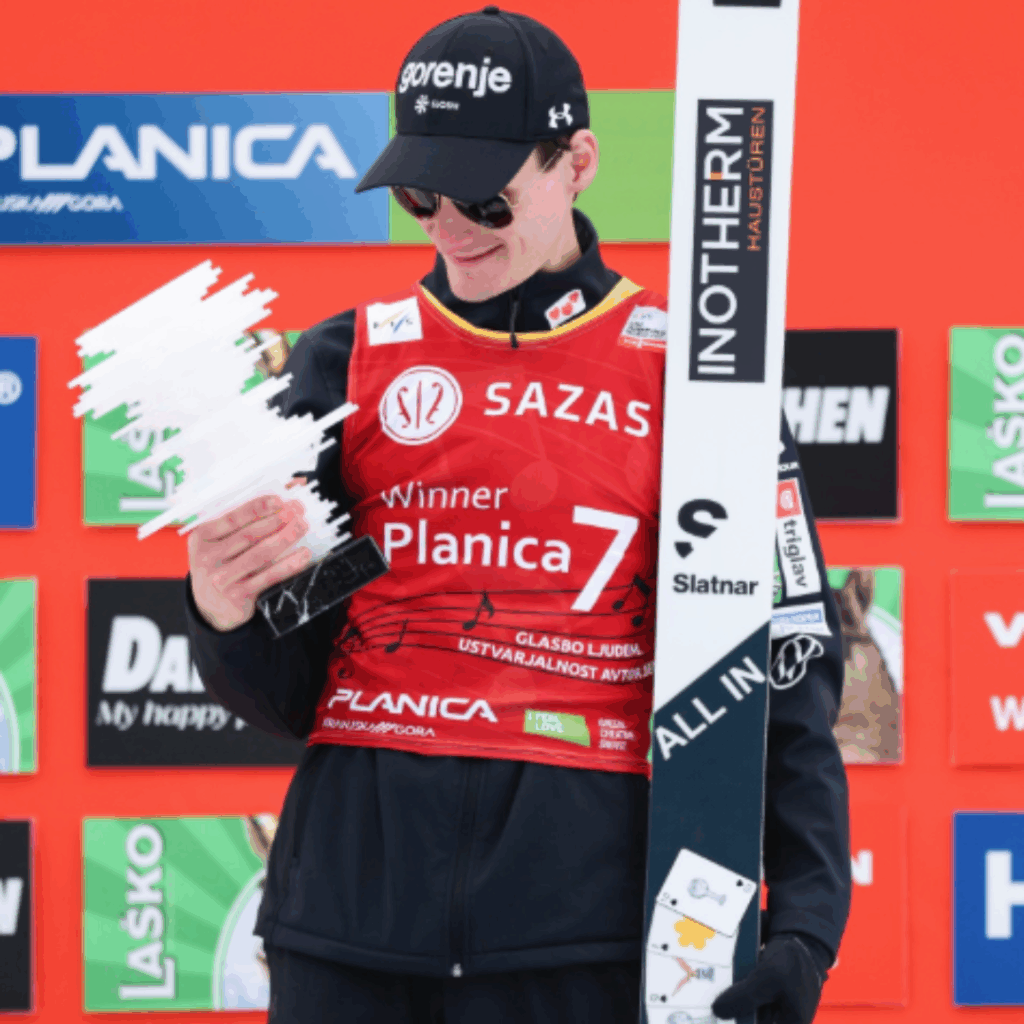
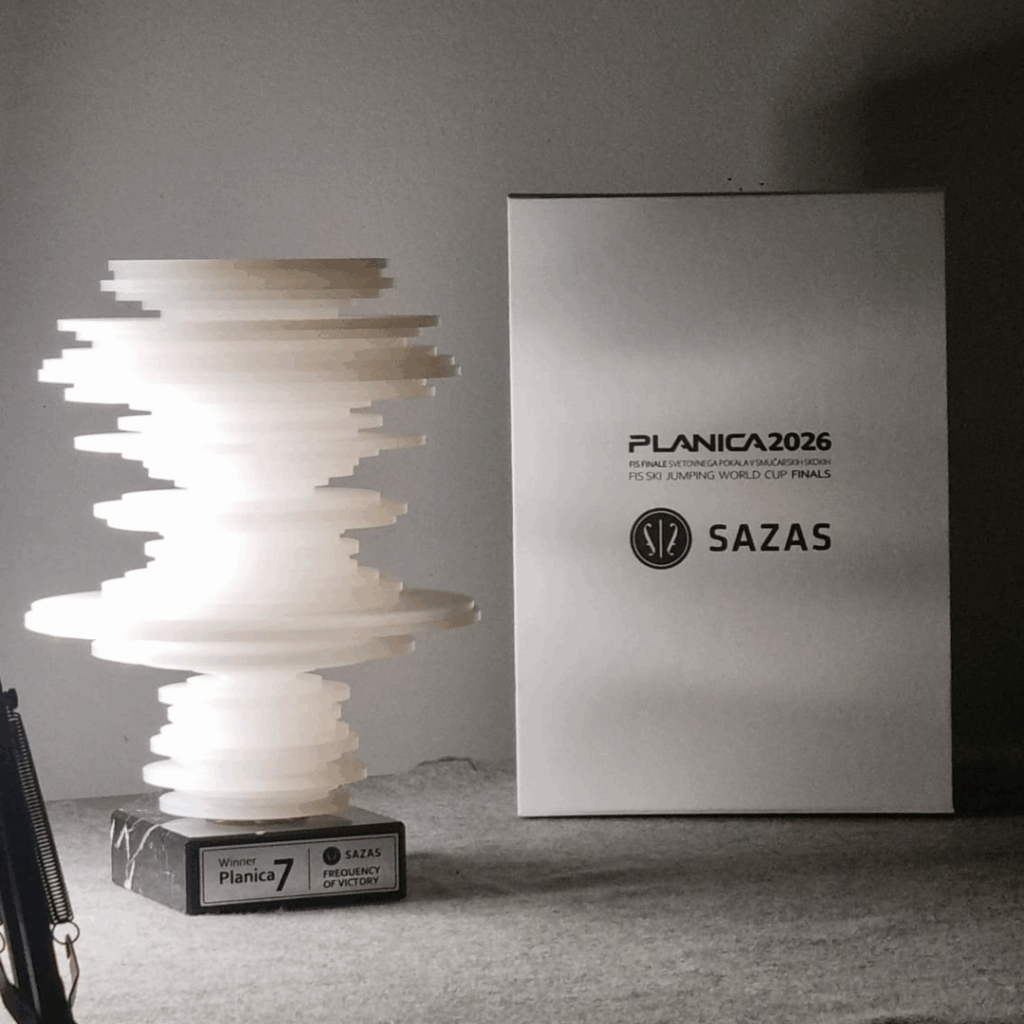
Planica is one of the most recognizable sporting events in Slovenia. That means every element connected to the event must be executed at a level that matches its significance, visibility, and symbolic weight.
In a project like this, it is not enough for the product to be completed on time. It also has to be visually convincing, materially appropriate, and flawlessly executed in a context where every detail is publicly exposed.
The initial direction assumed a printed production approach. However, after professional evaluation, such an approach did not represent the optimal path to the final result, considering the deadline, the desired visual outcome, and the choice of material.
That is why we at Chemets chose a different, hybrid approach.
This decision was crucial. Not because any single process was the most important one, but because it was necessary to select a combination of technologies that could deliver the required quality, visual effect, and production standard within the available timeframe.
In complex projects, this is often the decisive difference: not the question of what is technically possible, but what is most sensible from an execution standpoint.
The project required a strong understanding of different production options and their efficient coordination in time. This kind of approach is not based on the logic of one technology, but on the logic of the goal: how to achieve the best possible result under real production conditions.
This includes:
- assessing the limitations of individual processes,
- arranging the phases correctly,
- quickly aligning concept and execution,
- and being able to transfer a decision directly into production.
That is the essence of expertise in projects of this kind.
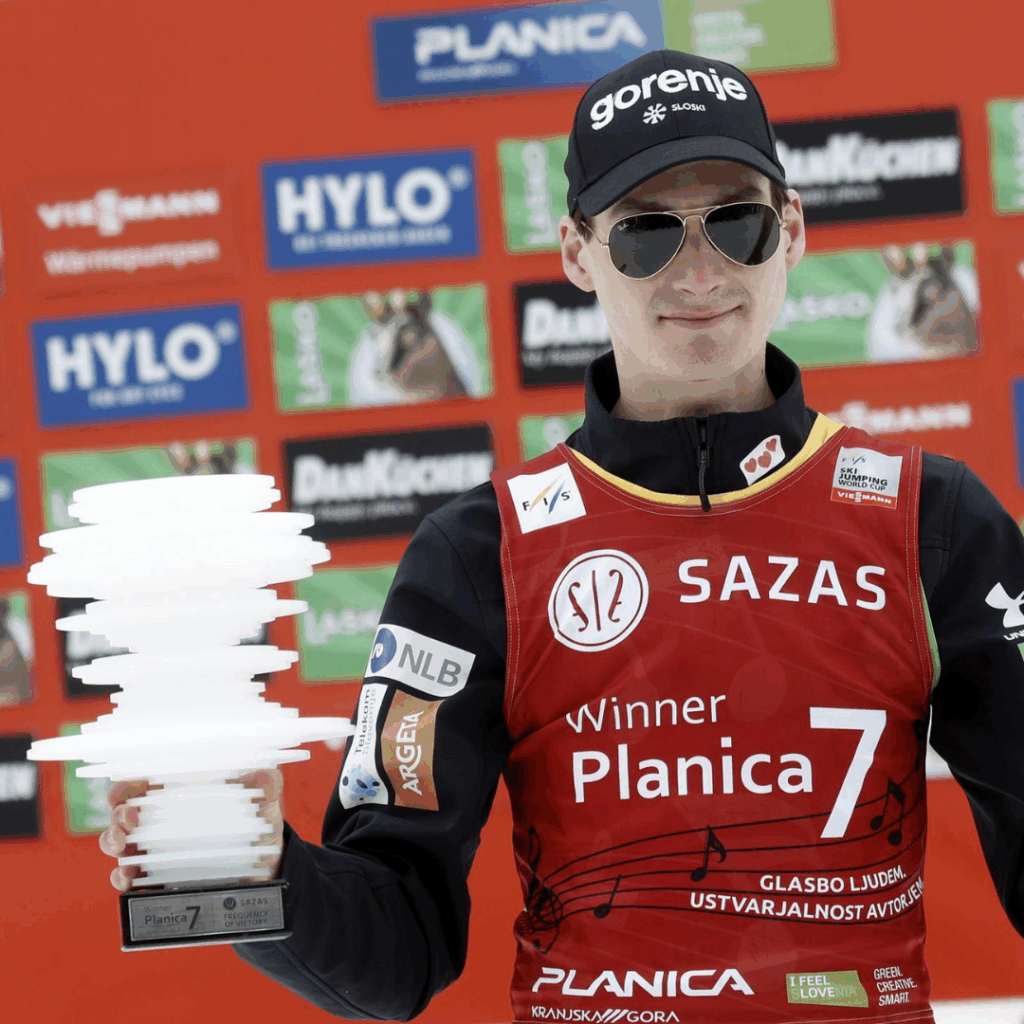
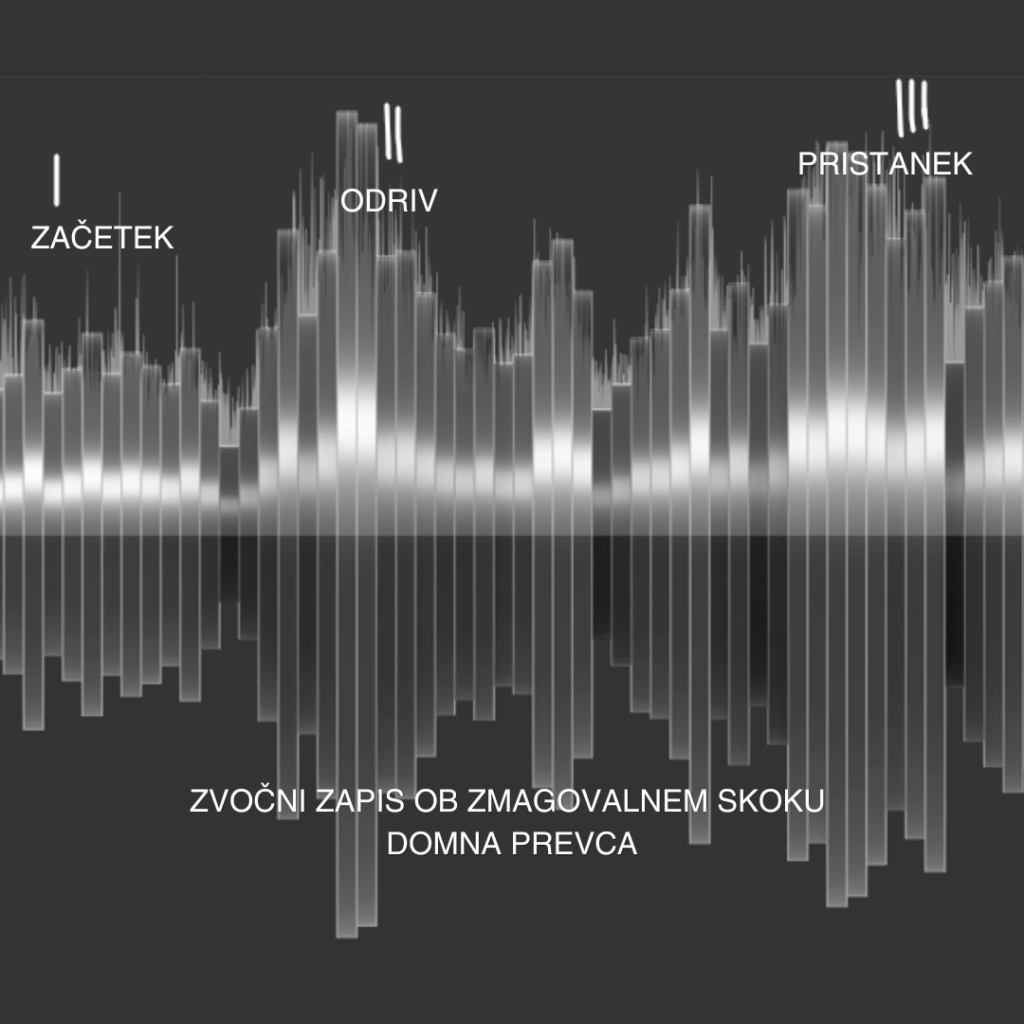
An important part of the project was also the transformation of cheering into the geometry of the trophy. The project concept envisioned that the sound would be captured, analyzed, and converted into a 3D model that would serve as the basis for the final shape of the award.
This part goes beyond conventional manufacturing, because it requires connecting data, design, and execution. Our colleague Žan, who has experience in sound and music, also contributed to this process, adding an important interdisciplinary dimension to the project.
Before final production, the client was presented with several visual and production options. The solution that best aligned the conceptual idea, production reality, and time constraints was then selected.
This phase was important because the project did not require production alone, but a development-and-execution approach. For a product with such a strong symbolic function, the final form must be supported by both aesthetic and technical logic.
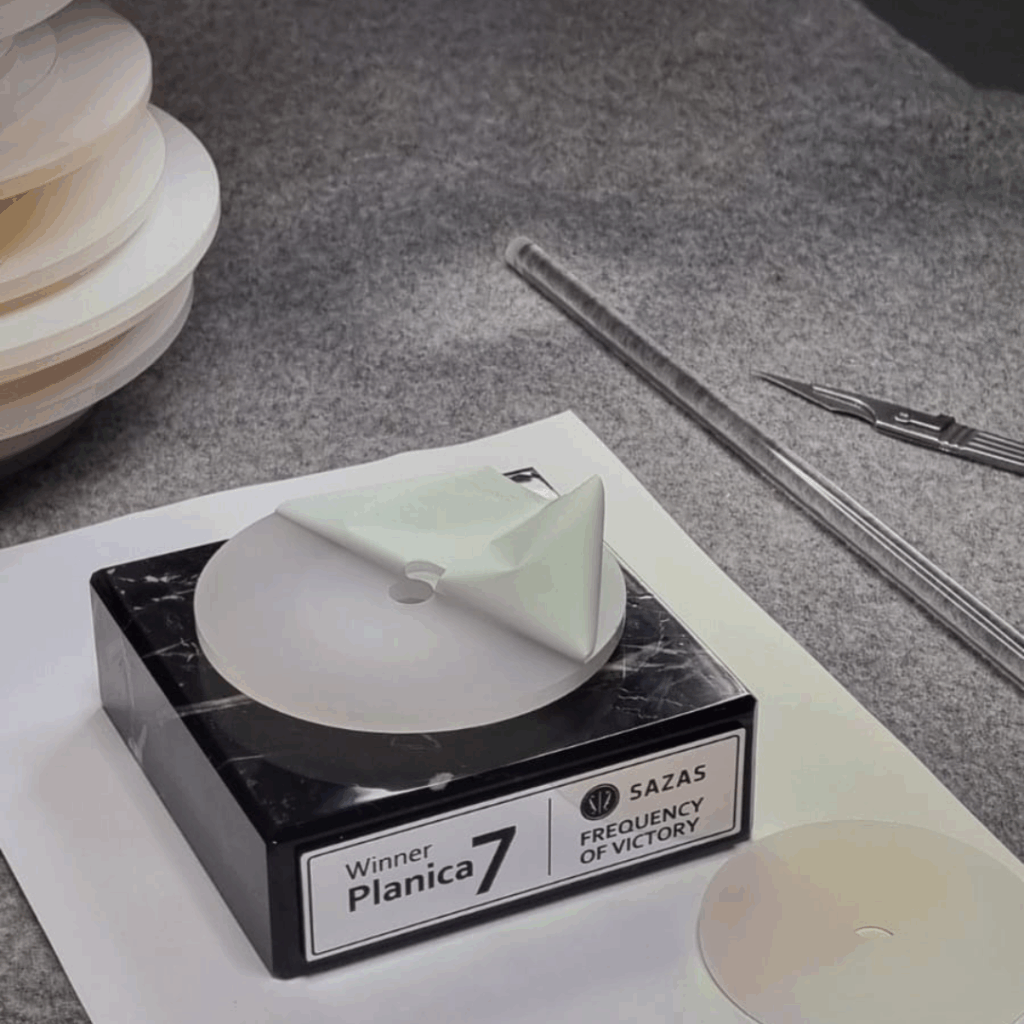
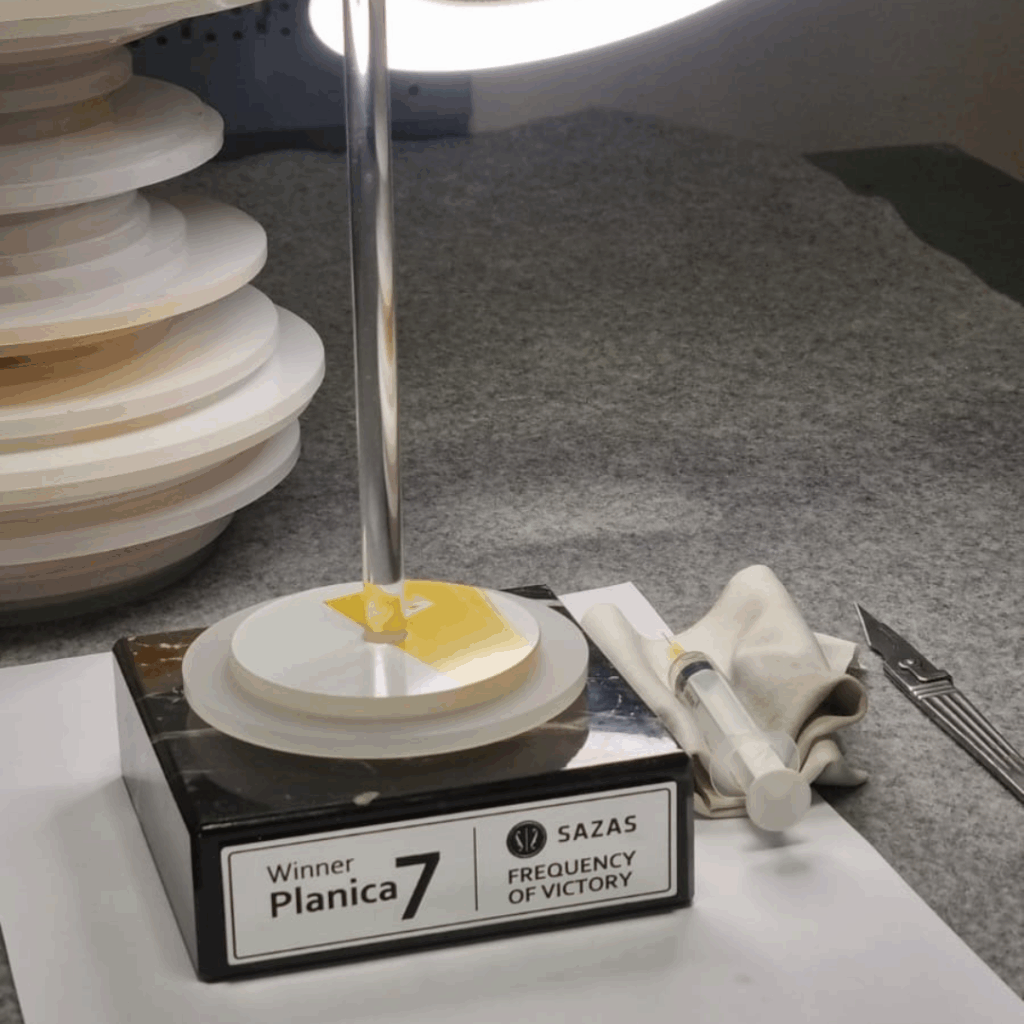
The project timeline was exceptionally short:
- order confirmation: Tuesday
- receipt of files: Friday evening
- completion and delivery: Saturday at 6 PM
Such a timeframe leaves no room for wrong decisions, unnecessary iterations, or poor transitions between phases. It requires fast evaluation, efficient organization, and execution discipline.
In projects like this, speed is not improvisation. It is the result of process maturity, clear task allocation, and a team that knows how to work in sync under extreme time pressure.
The Planica trophy is a strong example of what Chemets’ industrial competence means in practice. It is not only about the ability to manufacture, but about the ability to choose the right path to the final result.
The project confirms:
- professional judgment under demanding conditions,
- the ability to connect different technologies,
- fast and efficient execution,
- and the ability to maintain a high quality standard even within a very short timeframe.
For Chemets, participating in a project of this significance also matters on a broader level. It confirms that we can operate reliably in projects where public visibility, the symbolic weight of the product, and zero tolerance for execution errors all come together.
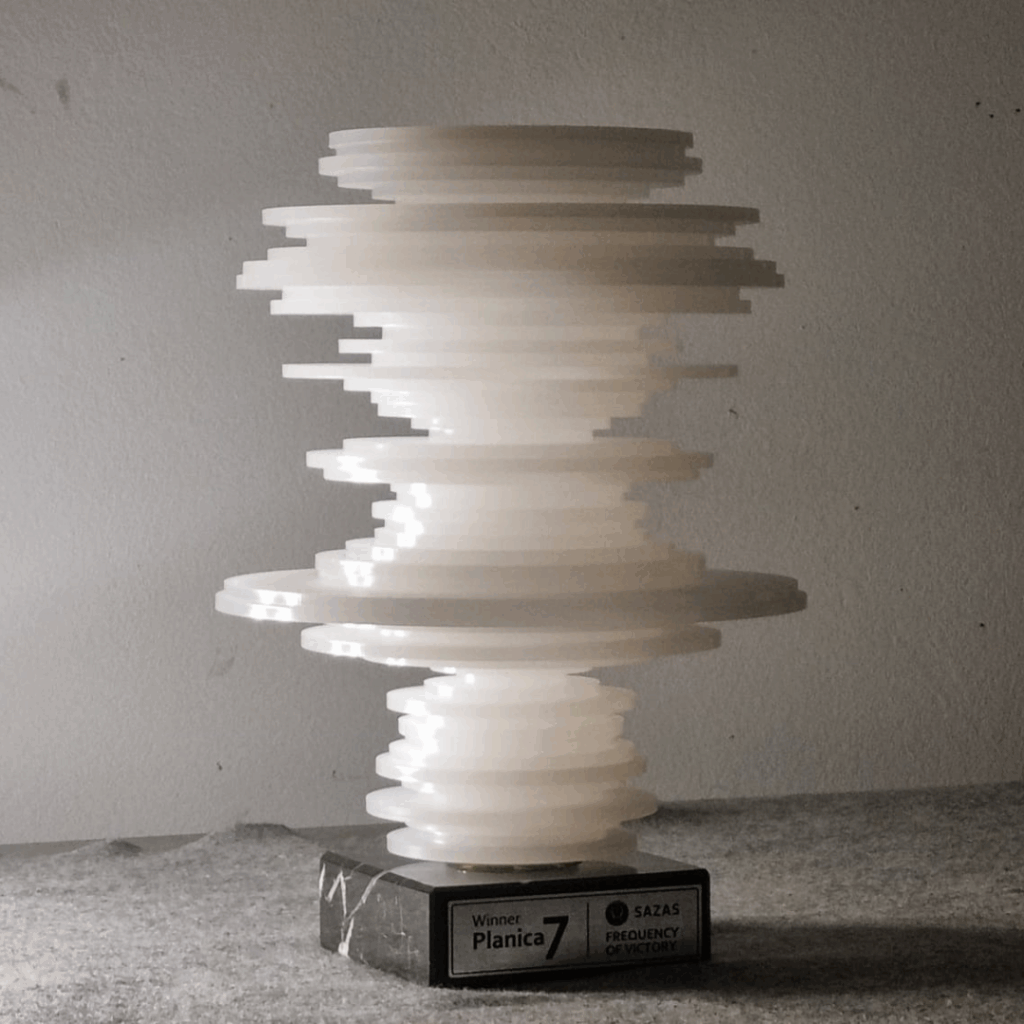
The Planica trophy was not just another product. It was a project in which success depended on technical judgment, the right execution model, and the ability to transform a complex idea into a high-quality final result within just a few hours.
It is in projects like this that it becomes clear that the greatest value often lies not in any single technology, but in the knowledge of how to integrate it, at the right moment, into a broader and efficiently managed process.
The project was carried out on behalf of SLOSKI – the Planica Organising Committee, while the concept for the “Fans’ Trophy – Planica 7” was developed within the client’s creative framework. Created in collaboration with SAZAS.
Do you have a project where timing, quality, and execution judgment are critical to the result?
Contact us, and together we will define the most suitable production path.