
At Chemets, we initiated a development project with a clear objective: to create an electric guitar in a single piece and assess how quickly the desired form could be achieved using 3D printing. The project was not conceived as a design experiment, but as a technical evaluation of the capabilities of 3D technologies in producing large, functional components.
The starting point was ambitious. It required combining part size, mechanical stability, and instrument functionality within a single manufacturing process. The primary goal was to reach the guitar’s base geometry as quickly as possible, which would then serve as a foundation for further development.
After printing, it became clear that shape alone does not result in a functional instrument. The guitar neck required additional reinforcement, as the material did not provide sufficient stiffness. Frets had to be added, along with the string anchoring mechanism, LED lighting, and electronic circuitry, in order for the prototype to include all essential elements of an electric guitar.
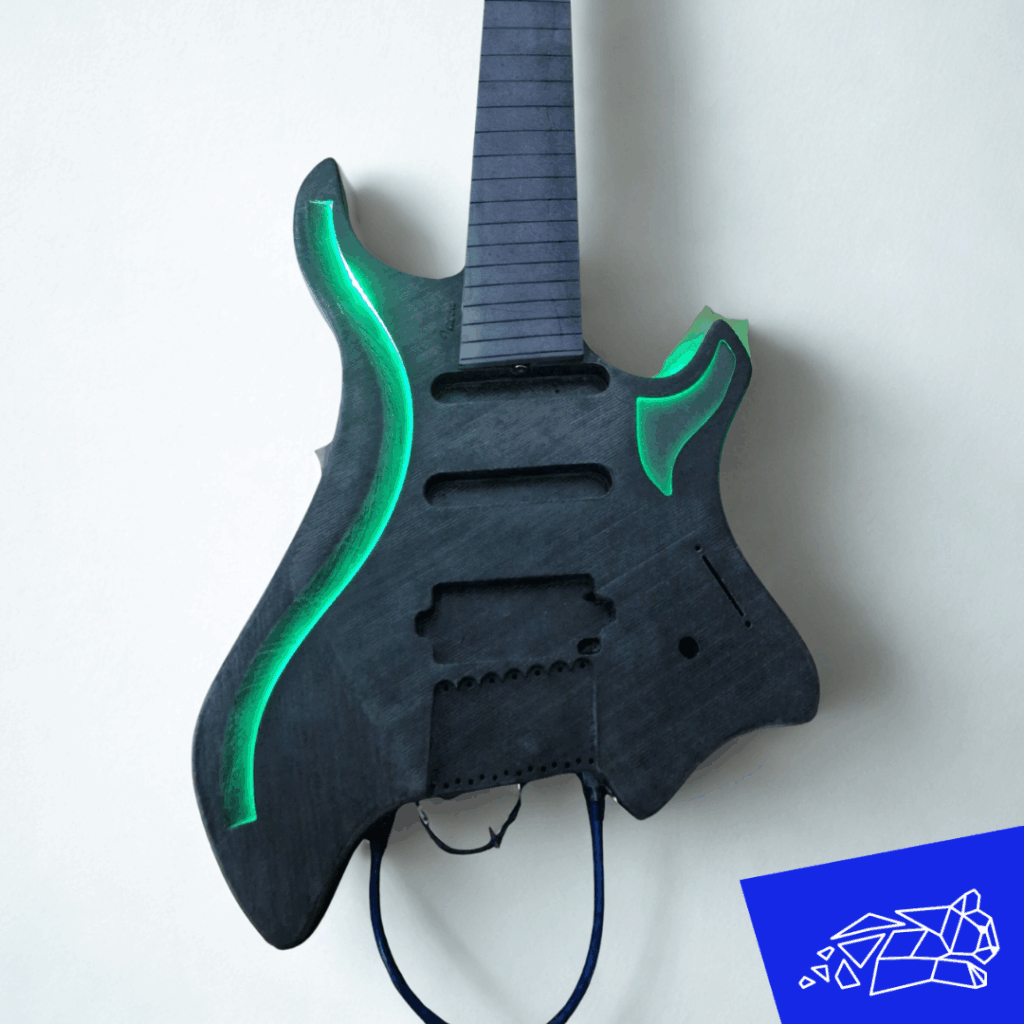
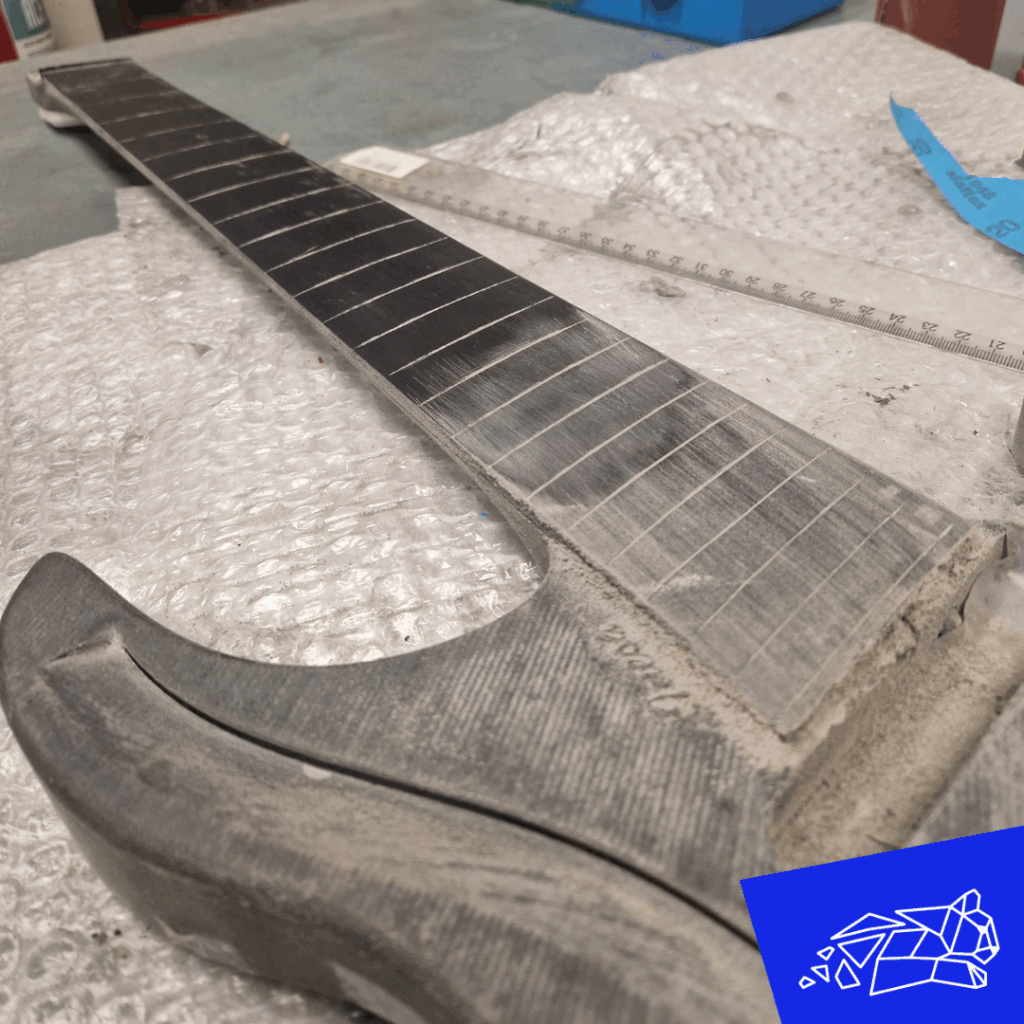
For printing, we selected HSS (High Speed Sintering) technology, as it is currently the only technology that enables printing components of this size in a single piece. This choice allowed us to obtain the instrument’s basic shape in a very short time. At the same time, the project clearly highlighted the material limitations for the guitar neck, where the material proved insufficiently strong for the intended design. Additional reinforcements were therefore required.
The goal of the project was not to produce a finished, market-ready product, but rather a development prototype that would provide clear answers to key questions:
- when 3D printing is suitable for producing a final product,
- where its real limitations lie,
- and when it makes sense to complement it with other manufacturing processes.
The result was a prototype that clearly demonstrated the advantages of rapid production while simultaneously highlighting the technical challenges associated with large, functional products.
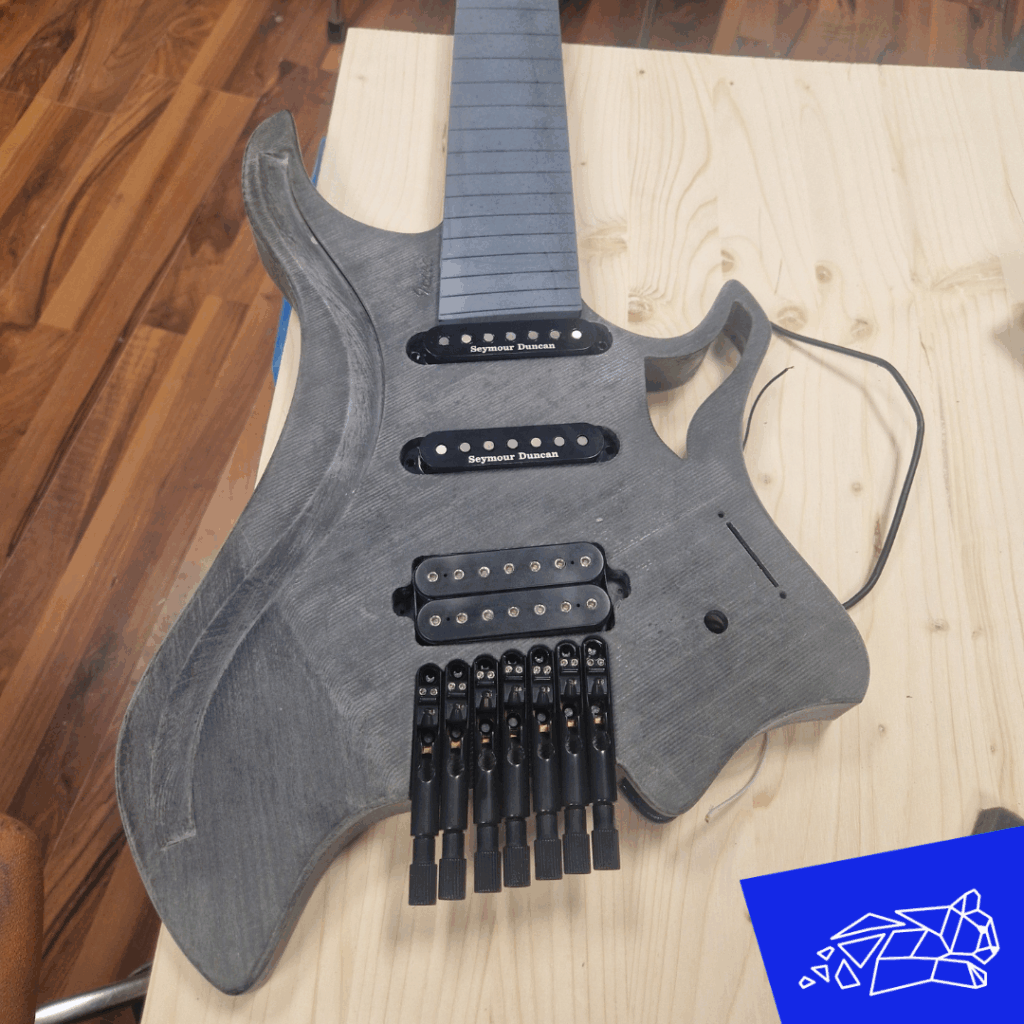
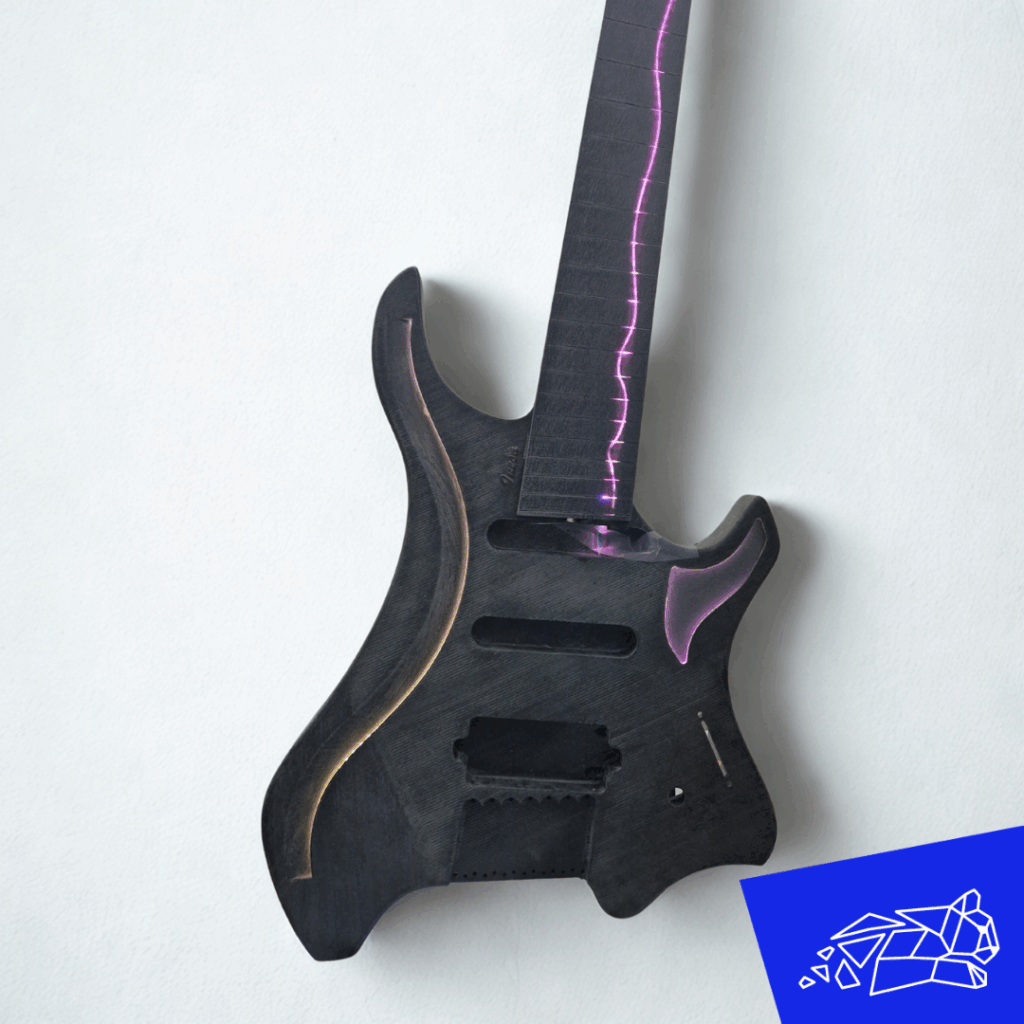
The one-piece electric guitar project confirms that 3D printing is an exceptionally powerful development tool, especially when used as part of a well-considered development process. Projects like this are not about perfection, but about understanding design, structure, materials, technologies, and real-world constraints. It is precisely at this stage that the true value of prototyping emerges—where knowledge, testing, and iteration lead to better and more mature final solutions.